
What Makes Bioluminescent Beaches Glow Like Starlight After Dark?

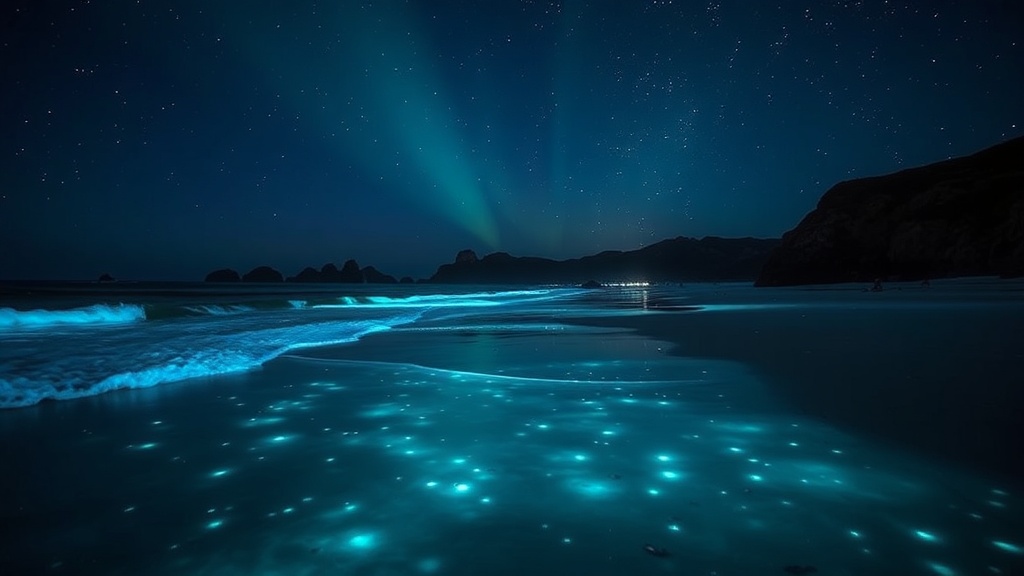
Phytoplankton called dinoflagellates emit electric blue light when disturbed—and when millions of them wash ashore, entire coastlines transform into mirrors of the night sky. This phenomenon occurs in roughly 15 confirmed locations worldwide, with concentrations dense enough to create that signature glow-in-the-dark effect that stops beachgoers mid-stride. We're diving deep into where these luminous shorelines hide, when to catch them at their brightest, and what makes these microscopic organisms light up in the first place.
Where Can You Find Glowing Beaches Around the World?
Most travelers picture bioluminescence in the Maldives—and yes, Vaadhoo Island's "Sea of Stars" has earned its fame. The beach glows reliably between June and October, with August and September typically offering the strongest displays. But here's what most Instagram captions don't mention: Vaadhoo isn't the only Maldivian island where this happens. Several other atolls—including Mudhdhoo and Rangali—experience similar blooms, often with fewer crowds jostling for the perfect shot.
The phenomenon isn't limited to tropical paradises either. Mosquito Bay on Vieques Island, Puerto Rico, holds a Guinness World Record for the brightest bioluminescent bay on Earth. Kayak through its mangrove channels on a moonless night and every paddle stroke leaves trailing ribbons of turquoise light. Puerto Rico's location in a protected wildlife refuge means light pollution stays minimal—critical for witnessing the full effect. The National Park Service manages guided tours that educate visitors while protecting this fragile ecosystem.
Australia's Jervis Bay, about three hours south of Sydney, delivers unexpected bioluminescence in a temperate setting. The bay's unique geography—shallow, protected waters with limited tidal exchange—allows dinoflagellates to concentrate in extraordinary numbers. Locals report the best sightings during the warmer months when nutrient-rich waters fuel population explosions. Tasmania's Preservation Bay has also emerged as a reliable southern hemisphere spot, proving this isn't strictly a tropical phenomenon.
California's coastline hides several lesser-known bioluminescent zones. San Diego's beaches experienced a massive bloom in 2020 that turned waves into crashing walls of neon blue for weeks. Further north, Monterey Bay's deep submarine canyon periodically pushes nutrient-rich water toward shore, triggering spectacular nighttime shows. The key difference in California? These blooms are unpredictable—driven by complex oceanographic conditions rather than seasonal reliability.
What Triggers the Bioluminescence Reaction?
Bioluminescence isn't magic—it's chemistry. Specifically, it's a defense mechanism. When dinoflagellates (primarily Noctiluca scintillans and Pyrodinium bahamense) sense physical disturbance, they release luciferin. This compound reacts with oxygen and the enzyme luciferase, producing that characteristic blue-white glow. Scientists theorize this flash startles potential predators—or attracts larger predators that might eat whatever's threatening the tiny organism. It's a chemical alarm system that's been fine-tuned over millions of years.
The color isn't arbitrary either. Blue light travels farthest in water and matches the wavelength most visible to marine life at depth. Red bioluminescence—which does occur in some deep-sea species—would be almost invisible in shallow coastal waters. Evolution favored blue because it works.
Population density determines whether you'll see individual sparkles or an entire glowing wave. A liter of seawater needs roughly 1,000 to 2,000 dinoflagellates before human eyes detect anything. For that electric blue wall effect? Concentrations often exceed 100,000 cells per liter. These massive blooms—called "red tides" during daylight hours because they discolor water—occur when nutrient availability, water temperature, and salinity align perfectly.
Here's something surprising: not all red tides glow. Some dinoflagellate species produce toxins that kill fish and make shellfish poisonous to humans without any light show. Florida's Gulf Coast experiences these harmful algal blooms regularly. Always check local advisories before swimming in discolored water.
When Is the Best Time to Witness Bioluminescent Beaches?
Moon phase matters more than most travelers realize. Even a quarter-moon can wash out subtle bioluminescence, rendering that expensive night kayaking tour disappointing. New moon periods offer the darkest skies and the most dramatic contrast. Check lunar calendars before booking—many tour operators schedule their brightest experiences around new moons.
Seasonal patterns vary by location. The Maldives sees peak bioluminescence during monsoon season (May through November), when nutrient runoff from heavy rains feeds dinoflagellate populations. Mosquito Bay glows year-round but reaches maximum intensity during the dry season when calmer waters allow concentrations to build. California's unpredictable blooms most commonly occur during late spring and early fall when upwelling events bring nutrients to the surface.
Time of night influences visibility too. Complete darkness—roughly two hours after sunset until moonrise—provides optimal viewing conditions. Light pollution from nearby development degrades the experience significantly. This is why Puerto Rico's Vieques maintains strict lighting restrictions around Mosquito Bay, and why Maldivian resorts often schedule bioluminescence walks well after dinner service ends.
How to Photograph Bioluminescence
Capturing this phenomenon challenges even experienced photographers. Your smartphone won't cut it—low-light performance simply isn't sufficient for moving water at night. A DSLR or mirrorless camera with manual controls becomes necessary. Settings typically require ISO 3200 or higher, wide apertures (f/2.8 or wider), and exposure times between 10-30 seconds. A sturdy tripod isn't optional; it's mandatory.
The real trick? Timing the wave action. Long exposures blur crashing surf into misty blue sheets—but you'll want some definition to convey the scene. Experiment with shorter exposures (2-5 seconds) to freeze wave crests while maintaining enough sensitivity to capture the glow. Some photographers use flashlights to briefly illuminate foreground elements during long exposures, creating striking composite images.
Why Should Travelers Approach Bioluminescent Beaches Responsibly?
These ecosystems are fragile. Mosquito Bay's bioluminescence actually dimmed during the 1990s due to light pollution, pollution, and physical damage to mangrove channels. Only intensive conservation efforts restored its former brilliance. Even sunscreen chemicals can harm dinoflagellate populations—some tour operators now require reef-safe products or provide long-sleeve UV protection instead.
Physical disturbance poses the greatest threat. Walking through shallow bioluminescent water crushes countless organisms. Stirring sediment reduces water clarity and can introduce pollutants. This is why kayaking beats swimming at most protected sites—the impact concentrates in narrow channels rather than spreading across entire beaches.
Climate change adds uncertainty. Warmer ocean temperatures alter bloom timing and intensity. Some researchers predict range shifts that could make currently reliable destinations less predictable while creating new bioluminescent zones elsewhere. A 2021 study in Harmful Algae journal documents how warming waters in the Arabian Sea have intensified Noctiluca blooms—with complex ecological consequences that scientists are still untangling.
The good news? Responsible tourism funding supports conservation. Entrance fees, guided tour licenses, and resort partnerships provide economic incentives for local communities to protect these natural wonders. When you book with established operators who emphasize education alongside entertainment, your visit contributes to preservation rather than degradation.
Planning Your Bioluminescence Adventure
Start with realistic expectations. Social media heavily edits bioluminescence photos—raising contrast, saturating blues, sometimes compositing multiple exposures. The real experience is subtler but somehow more magical because you're witnessing actual living chemistry. Bring red-light headlamps (they preserve night vision), wear dark clothing, and prepare for mosquito encounters at mangrove sites.
Build buffer days into your itinerary. Bioluminescence depends on conditions beyond anyone's control. A three-night stay in a known location dramatically improves your odds compared to a single evening attempt. Some Maldivian resorts now employ marine biologists who monitor dinoflagellate concentrations and can advise guests on peak viewing windows.
Consider combining destinations. A trip that pairs Puerto Rico's Mosquito Bay with bioluminescent lagoons in Jamaica (where microscopic comb jellies create similar effects) maximizes your chances while spreading risk across different ecosystems. Each location offers distinct characteristics—the narrow mangrove channels of Vieques versus open beach exposure in Negril.
The world's glowing beaches represent rare convergence points where microscopic life creates macroscopic wonder. They're reminders that the most extraordinary travel experiences often come from the smallest sources—and that protecting these fragile phenomena requires conscious choices from every visitor lucky enough to witness them.