
The Algarve: The Honest Guide (What Makes Portugal's Coast Actually Worth It)

Okay, here's the thing about the Algarve.
Everyone says Portugal is underrated. Everyone says the Algarve is cheaper than Spain or Italy. And they're not wrong — but there's a catch. The Algarve can feel overrun with package tourists if you hit it wrong, or absolutely magical if you time it right and know where to actually go.
I've spent two weeks down there across different seasons, stayed in everything from $50/night Airbnbs to mid-range hotels, and eaten at enough seafood shacks to know which ones are worth your money. Here's the honest breakdown.
The Quick Take
| Best month to go: | May or September |
| Worst month to go: | July-August (peak season, chaos, prices spike 40%+) |
| Water temperature: | 60°F (Jan-Mar) → 75°F (Aug) → 65°F (Nov) |
| Daily budget (2 people): | $100-150/day (mid-range) |
| Beach quality: | 9/10 — Golden cliffs, clear water, dramatic formations |
| Vibe: | Relaxed beach town meets European sophistication |
| Best for: | Couples, beach lovers, people who want Europe without the crowds |
The Beach: What It Actually Looks Like
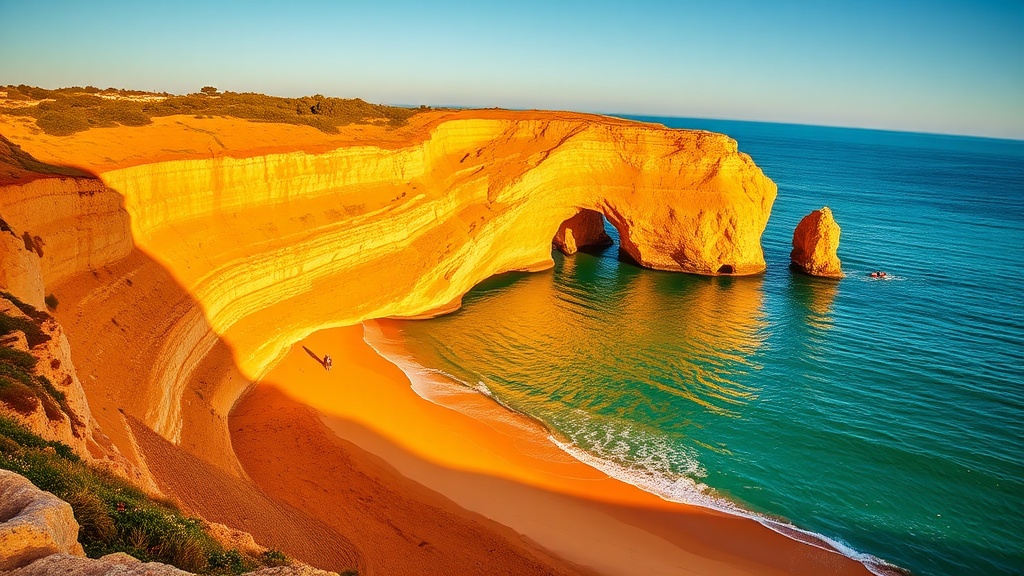
The Algarve isn't one beach — it's a 100km coastline of different vibes. But here's what unites them: golden sandstone cliffs that look like they're on fire at sunset.
The water is crystal clear (seriously, you can see the sand 20 feet down), the sand is golden and soft, and the cliffs create these natural coves that feel private even when there are people around. It's not the turquoise Caribbean water, but it's close enough and honestly better for actual swimming because the water is clearer.
Real talk: In July and August, popular beaches like Praia da Falésia get packed with families and tour groups. If you go then, wake up at 7 AM or you won't find parking. In May and September? You get the same beach with 60% fewer people.
Where to Actually Go
Lagos (West Algarve): The town itself is gorgeous — colorful buildings, a historic center, and it's within walking distance of three incredible beaches. Ponta da Piedade is the famous one (the cliffs that pop up everywhere on Instagram), but Praia da Dona Ana is actually better for swimming — calmer water, same cliffs, fewer crowds if you go mid-day.
Albufeira (Central): This is where the package tourists congregate. Skip the old town beach (it's crowded and mediocre) and go to Falésia instead — 5km away, dramatic red cliffs, way more space. Or better yet, skip Albufeira entirely and base yourself in Lagos or Tavira.
Tavira (East): Smaller, quieter, less touristy. The beaches are less dramatic than Lagos but the town is charming and you'll actually eat where locals eat. This is where I'd stay if I wanted to avoid other travelers.
Where to Stay: $50-150/Night
The Algarve hotel market is wild — you can find everything from $40 Airbnb rooms to $500/night resort villas. Here's where the value actually is:
Best mid-range sweet spot: Hotel de Charme Capela das Artes (Armação de Pêra)
$95-120/night | 9.2/10 rating | Quirky, charming, pool, breakfast included
Why: You get a boutique hotel feel without the boutique price. It's 3km from the beach but has a shuttle. The breakfast alone is worth it.
If you want to be in Lagos: Hotel Marina Rio
$110-140/night | 9.0/10 rating | Marina views, heated rooftop pool, walking distance to beaches
Why: Marina location is actually better than being directly on the beach. You get the town vibe without the noise.
Budget option: B&B HOTEL Olhão
$55-75/night | 8.6/10 rating | Modern, clean, quiet
Why: Not as scenic as Lagos but 30min from the beaches and you save $50/night. That's $700 over a week.
Skip: The big resorts in Albufeira ($150-300/night). You're paying for the name and the pool, not the beach. The beaches next door are better and cheaper hotels exist.
Food: Where Locals Actually Eat
The Algarve has amazing seafood. The trap is paying €25 for a fish sandwich at a tourist trap when a local spot does it for €8.
Breakfast (€5-8): Pastéis de nata (cream pastry) + coffee at any pastelaria. They're everywhere. Get one.
Lunch (€8-15): Grilled fish or octopus at a beachside shack. Look for places where fishermen eat — you'll know it when you see it. Ribeira do Poço in Vila do Bispo is legendary for fresh seafood platters (€12-18 per person).
Dinner (€12-25): The seafood is absurdly good. Arroz de marisco (seafood rice) is the move — €18-22 and it feeds two. Find a restaurant near the marina in Lagos or Tavira, not in the old town tourist area.
Drinks (€3-5): Local wine is cheap and good. A bottle at the supermarket is €4-6. A glass at a bar is €2-3.
Specific recs:
- Cais Ao Mar (Albufeira) — Seafood platter, €25/person, worth every euro
- Taberna do Galo (Tavira) — Local spot, fresh fish, €12-18
- Any market restaurant in Olhão — The fish market has restaurants attached. Eat where the fish just came in.
Getting Around
From Faro Airport: 1 hour to Lagos by car, 45min to Albufeira, 30min to Tavira. Taxi costs €30-40. Rental car is €25-35/day (worth it if you're staying 4+ days).
Do you need a car? Yes, if you want to explore different beaches. No, if you're staying in Lagos or Tavira and happy to walk around town and take one beach day trip.
Public transport: Buses exist but they're slow. Taxis are cheap (€5-10 between towns). If you rent a car, parking at beaches is €2-4/day.
What's Great About the Algarve
- The cliffs are genuinely stunning — Unlike Mediterranean beaches that are just sand, the Algarve has geology. The golden cliffs at sunset are a 10/10.
- The water is crystal clear — You can see 20+ feet down. It's perfect for snorkeling without needing a boat tour.
- It's affordable — Compared to Spain's Costa del Sol or Italy, you're paying 30-40% less for the same quality.
- The food is incredible and cheap — Fresh seafood, local wine, and you're not paying tourist markup if you eat where locals eat.
- It's not overcrowded in shoulder season — May and September are perfect. You get summer weather without July's chaos.
- The towns have character — Lagos has history, Tavira is charming, even Albufeira's old town is worth an afternoon.
What Nobody Tells You About the Algarve
- July and August are a zoo — Seriously. Beaches are packed, hotels are booked, prices spike 40%+. If you can avoid these months, do it.
- Rainy season is real (November-March) — It's not constant rain, but you'll get 3-4 rainy days per week. Still swimmable (water is 60°F), but you won't be lounging on the beach all day.
- The "beachfront" hotels are sometimes a walk — Check the actual distance before booking. "Oceanview" doesn't mean you can see the ocean from your room.
- Seaweed happens (June-September) — Some years worse than others, but sargassum seaweed washes up. It's not a deal-breaker but it's worth knowing.
- The old town tourist restaurants are a trap — Avoid the places with picture menus and staff outside trying to get you in. Eat one block away and save 50%.
- Parking at popular beaches fills up by 11 AM in summer — Arrive early or go to less-famous beaches (they're just as good).
- The water is colder than you think in spring/fall — May is 65°F, September is 70°F. A wetsuit or rash guard makes a difference if you're sensitive to cold.
Timing Guide: When to Actually Go
| Month | Weather | Crowds | Price | Verdict |
|---|---|---|---|---|
| January | Cold (54°F), rainy | Low | Cheap | Skip unless you want solitude |
| February | Cold (56°F), rainy | Low | Cheap | Skip (worst month) |
| March | Cool (59°F), some rain | Low | Cheap | Okay if you don't mind cool water |
| April | Mild (64°F), less rain | Medium | Moderate | Getting better, spring break starts |
| May | Warm (70°F), dry | Medium | Moderate | BEST MONTH — Perfect weather, not packed |
| June | Warm (75°F), dry | High | High | Good but starting to get crowded |
| July | Hot (78°F), dry | Very High | Very High | Peak season chaos — skip if possible |
| August | Hot (79°F), dry | Very High | Very High | Peak season chaos — skip if possible |
| September | Warm (75°F), dry | Medium | Moderate | SECOND BEST MONTH — Summer weather, fewer crowds |
| October | Mild (70°F), some rain | Low | Moderate | Good if you like it warm but not hot |
| November | Cool (64°F), rainy | Low | Cheap | Rainy but still swimmable |
| December | Cold (58°F), rainy | Low | Cheap | Skip (too cold, too wet) |
The move: Go in May or September. You get 75°F water, dry weather, and way fewer tourists. Hotels are 30-40% cheaper than July/August. Flights from Boston run $450-550 roundtrip if you book 6 weeks out.
Total Trip Cost: 7 Days for Two People
| Flights (Boston to Faro, roundtrip for 2): | $900 ($450 each) |
| Hotel (6 nights @ $110/night): | $660 |
| Food (7 days @ $30/day for 2): | $210 |
| Rental car (5 days @ $30/day): | $150 |
| Activities (beach days, maybe one boat tour): | $50 |
| Misc (parking, tips, coffee): | $50 |
| TOTAL: | $2,020 |
That's $1,010 per person for a week including flights. If you skip the rental car and just stay in Lagos, you can knock off $150.
The Bottom Line
The Algarve is worth it. The cliffs are genuinely stunning, the water is crystal clear, the food is incredible, and it costs way less than Spain or Italy. But you have to time it right and know where to actually go.
Go in May or September. Stay in Lagos or Tavira, not Albufeira. Eat where locals eat, not at the tourist restaurants. Rent a car and explore different beaches instead of camping at one spot.
Do that, and you'll have a trip that costs $1,000/person and feels like it should have cost $2,000.
Skip July and August. The beaches are packed, the prices are inflated, and you'll spend half your time stuck in traffic looking for parking. The Algarve is perfect in shoulder season — there's no reason to go when everyone else is.