
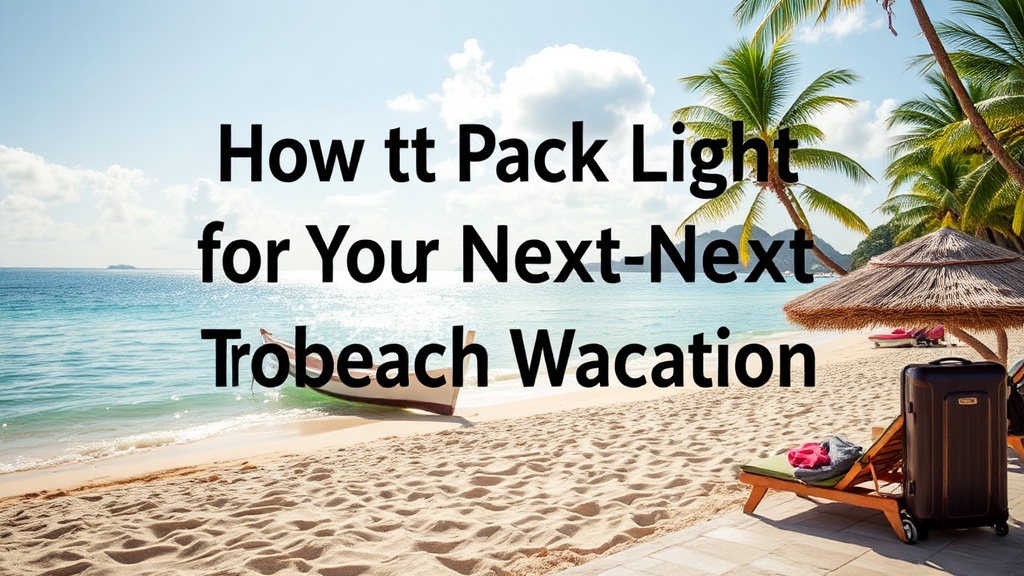
How to Pack Light for Your Next Tropical Beach Vacation

Packing light for a tropical beach vacation isn't just about avoiding baggage fees—it's about freedom. The ability to step off the plane and head straight to the sand without wrestling oversized suitcases transforms the entire travel experience. This guide covers strategic clothing choices, smart gear selection, and proven techniques to fit everything into a carry-on (yes, really) while staying comfortable and stylish from sunrise snorkeling to sunset cocktails.
What Should You Pack for a Week-Long Beach Vacation?
You need far less than you think. Most travelers overpack by 50%—tossing in "just in case" items that never leave the suitcase. For tropical destinations, the formula is simple: lightweight layers, quick-dry fabrics, and versatile pieces that work double or triple duty.
Start with the foundation. Three to four swimsuits (rotate them—salt and chlorine degrade elasticity), two pairs of shorts, and two casual dresses or lightweight shirts. That's it for bottoms and tops. The secret? Fabrics that breathe and dry fast. Patagonia Baggies shorts work for hiking, swimming, and dining al fresco. Linen button-downs—wrinkled is the look—transition from beach cover-up to restaurant-ready in seconds.
Footwear follows the same less-is-more philosophy. A pair of Chaco Z/Cloud sandals handle rocky shorelines and village strolls. Flip-flops (Havaianas—nothing else compares for arch support) for poolside lounging. One pair of casual sneakers—Allbirds Tree Runners pack flat and handle unexpected treks through town. Three pairs total. Your back will thank you.
How Do You Fit Two Weeks of Clothes in a Carry-On?
The right technique beats brute force every time. Roll, don't fold—tightly rolled garments resist wrinkles and fill gaps between shoes and toiletry bags. Use compression cubes. Eagle Creek's Specter Tech cubes squeeze bulky items (towels, jackets) to half their size. Pack by outfit, not by category. Group complete looks together so you're not digging through underwear to find that one tank top.
Here's the thing about tropical destinations: laundry exists. Most beach towns have same-day wash-and-fold services for $5-10. Pack for five days, wash mid-trip, repeat. Suddenly that daunting two-week trip requires the same luggage as a long weekend.
toiletries are where travelers lose precious space. Decant everything—shampoo, conditioner, sunscreen—into GoToob+ silicone bottles (TSA-approved, leakproof, and they suck every drop out). Solid alternatives save even more room. Ethique's solid shampoo and conditioner bars last months, weigh nothing, and won't explode at altitude. Sunscreen? Bring one high-quality mineral option—Sun Bum Mineral SPF 50—and buy more locally if needed.
| Item | Traditional Packing | Light Packing Alternative | Space Saved |
|---|---|---|---|
| Towels | 2 bulky cotton beach towels | 1 microfiber pack towel (Sea to Summit) | 80% |
| Shoes | 4-5 pairs for every occasion | 3 versatile pairs | 60% |
| Toiletries | Full-size bottles | Solid bars + silicone bottles | 70% |
| Electronics | Laptop, tablet, e-reader, camera | Smartphone + waterproof case | 90% |
| Clothing | 14+ separate outfits | 5 mix-and-match outfits | 65% |
Worth noting: that microfiber towel dries in thirty minutes, weighs ounces, and doubles as a beach blanket. The bulky hotel towel? Leave it.
What Gear Do You Actually Need for Beach Activities?
Most "must-have" beach gear is marketing. The reality? A waterproof phone case, quality sunglasses, and reef-safe sunscreen cover 90% of situations. Everything else is negotiable—or rentable.
Snorkel gear takes up half a suitcase. Quality masks and fins run $15-25 per day to rent at virtually every tropical destination. The exception: prescription masks. If you require corrective lenses, invest in a custom mask (Promate makes excellent optical options) and carry it. The rental shop won't have your prescription.
Cameras present the biggest packing dilemma. Underwater housings for DSLRs cost hundreds and weigh pounds. The alternative? GoPro Hero 12 Black—palm-sized, waterproof to 33 feet without a case, and footage rivals cameras ten times the price. Add a floating hand grip (trust us on this) and a small dry bag for boat trips.
Reading material. The catch? Physical books are glorious—and heavy. A Kindle Paperwhite holds thousands of titles, lasts weeks on one charge, and works in direct sunlight. Load it with beach reads before departure. That said, one paperback for poolside lounging won't sink the ship. Choose wisely.
The Non-Negotiables
Certain items earn their weight. A wide-brimmed hat—Sunday Afternoons Ultra Adventure—packs flat, floats, and has a 50+ UPF rating. Reef-safe sunscreen isn't optional in many destinations (Hawaii, Key West, and Palau ban chemical sunscreens entirely). Look for zinc oxide or titanium dioxide formulas.
A small dry bag—5 liters is plenty—protects electronics from splashes, sudden downpours, and overzealous pool games. Sea to Summit's Lightweight Dry Sack weighs less than a deck of cards and compresses to nothing when empty.
The Leave-It-Behinds
Hair dryers—every decent hotel and Airbnb has one. Multiple handbags—crossbody bags work for markets and museums alike. Jewelry (beyond wedding rings and simple earrings)—it attracts attention you don't want and disappears into sand). Books for "just in case" boredom—you're on a beach. Boredom is the point.
How Do You Pack for Different Tropical Climates?
Not all beach destinations are created equal. Caribbean islands stay hot and humid year-round—breathable cotton and linen reign supreme. Southeast Asian beaches (Thailand, Vietnam) have distinct wet seasons. A lightweight rain jacket—Patagonia Houdini, 3.7 ounces—saves trips during monsoon months.
The dry heat of Baja California or Australia's Gold Coast demands sun protection above all else. Long-sleeved UPF shirts—Columbia PFG line—feel counterintuitive but block rays more effectively than repeated sunscreen applications. They're also surprisingly cool.
Evenings vary dramatically. Hawaiian nights stay warm—shorts and a light cardigan suffice. Mexican Pacific coast or Mediterranean beaches cool down considerably. One merino wool layer—Smartwool's 150 weight—regulates temperature, resists odor for days, and weighs nothing.
"Packing light isn't about deprivation—it's about intention. Every item earns its place." — Travel writer Rolf Potts, Vagabonding
The Airport Strategy
Here's the thing about tropical travel: you're wearing half your luggage. Board the plane in your heaviest items—jeans (if you packed them), the bulkier shoes, that merino layer. It looks ridiculous walking through January airports, but you'll appreciate the suitcase space when you're selecting fresh pineapple at a Costa Rican market.
Keep essentials in your personal item. A change of clothes, medications, and valuables stay with you—checked bags occasionally take tropical detours. Tortola and Virgin Gorda are beautiful, but not when your luggage is enjoying the view without you.
The final weight test: lift your packed bag overhead. Struggling? Remove two more items. You'll find them in paradise if truly necessary—or realize (as most do) that you never needed them at all. The best beach vacations happen when your hands are free, your shoulders unburdened, and your attention fixed on the horizon where sky meets sea.
Steps
- 1
Choose Versatile Clothing Items
- 2
Minimize Toiletries and Electronics
- 3
Select Multi-Purpose Beach Gear